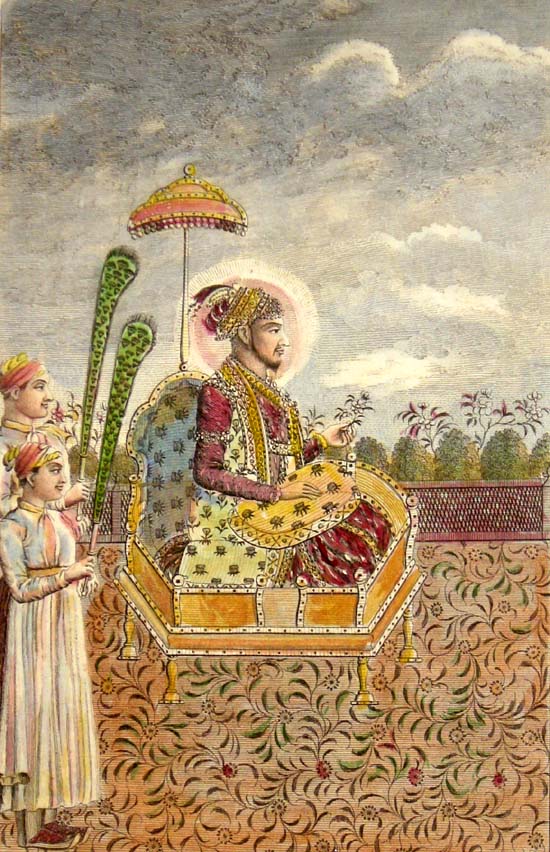
In February 1760, Shah Alam, the thirty year old Mughal Emperor made a daring crossing into Bengal. His goal? To retake the province and use the resources garnered from it to bring down the terror that was Imad ul-Mulk in Delhi and restore the Mughal Empire to some glory.
The task before Shah Alam was a daunting one. His army was ill-trained and running low on resources, both financial and otherwise. His enemy, Mir Jafar, was Nawab of Bengal and was backed by the ascendant East India Company. The Company had superior financial resources to Shah Alam and was developing an army that would be unlike anything ever seen in India before.
However, there was one benefit that Shah Alam had. Bengal was in anarchy. Mir Jafar had become an opium addict, his son and heir Mir Miran was a tyrant who was loathed by many and the East India Company was considering changing who it invested in.
Before he could take Bengal however, Shah Alam needed to prove that he had the credentials to be a challenge for Mir Jafar. It was therefore with the encouragement of Mir Ashraf, a local noble who had defected from Mir Jafar, that Shah Alam ventured toward Patna.
Such was the anarchy in Bengal and such was the appeal of Shah Alam-a young man, with charisma and confidence in himself-that within a few days of his arriving in Bengal, numbers of the old Mughal nobility threw off their allegiance to Jafar and joined him. This saw Shah Alam bring some 20,000 followers and soldiers of fortune, all of whom had been drawn by the royal charisma.
Bolstered by the arrival of 200 Frenchmen under the command of Jean Law de Lauriston, Shah Alam’s ragtag army was trained up to as good a standard as possible using the latest European techniques. Jean Law was named commander of the artillery, and with the army bolstered by the three most important zamindars in Bengal, the army marched onward.
The first test for this army came at the Battle of Masumpur, where they fought an army led by the East India Company’s Sepoys who were commanded by the Governor of Patna Raja Ram Narain. The Mughal army broke the Company’s lines and forced the Company to flee. Some believed that Shah Alam should have ordered his army to chase after the fleeing Company army to completely destroy them. However, the Shah instead allowed the enemy army to flee back to Patna, where they quickly sealed themselves within the city and prepared for a siege, a siege which Shah Alam and his army were not equipped to lead.
But, what if Shah Alam had been a bit more ruthless and decided to finish off the Company army then and there before they got to Patna?
Well, as historian Ghulam Hussain Khan points out, had Shah Alam ordered his men to fall on the Company army, they would most likely have been completely destroyed. Not only that but their commander Raja Ram Narain would either have been captured or killed. This would have left the way to Patna completely free for Shah Alam and his army. With no army to defend the city, it is likely that Shah Alam and his army could have taken Patna without a fight.
Having taken Patna, Shah Alam would now have proven that he meant business and that he was here to stay. This could have done wonders for his ability to recruit men and money for his cause. Particularly as William Dalrymple highlights, Patna held perhaps one fifth of the total revenue for Bengal. This could consequently have helped prevent Shah Alam’s men from needing to raid and loot the surrounding areas to pay for themselves, thus helping improve his and their popularity with the local populace.
Secondly, with Patna having fallen, it is possible that the Company may have considered changing their support from Mir Jafar to offering something to Shah Alam. Now, whether they would have done this just yet is not something I am sure about. The Company had done a lot to get Mir Jafar on the throne, including nearly bankrupting themselves. In real life, they only changed to supporting Mir Qasim-Jafar’s son in law-when Jafar’s son Mir Miran had died.
Keeping this in mind, it is likely then that the Company, or more likely Mir Jafar would try and send another army against Shah Alam. Not immediately after the fall of Patna, after all, they would likely need to figure out logistics, decide on objectives and account for the approaching monsoon. But within a few months or a year, after the Monsoon an army would likely be heading east.
All of which would give Shah Alam time to raise more men, train them and prepare for a potential siege. Now, as Ram Narain had shown, Patna could be very easy to defend with the right mentality and supplies. Additionally, with Shah Alam being very good at using the Imperial Mystique to draw men to him, it is possible whatever army Mir Jafar sent to retake Patna would be harassed along the way.
Assuming any attempt to retake Patna failed, then the road to Bengal’s capital, Murshidabad would be open, and it is very possible that the British may well have abandoned Mir Jafar and turned to Shah Alam. Something that would have made it even more likely that Shah Alam could have progressed on the capital and truly started his journey to retake Bengal and from there rebuild the Empire.
 Vivek Rajkhowa
Leave a comment