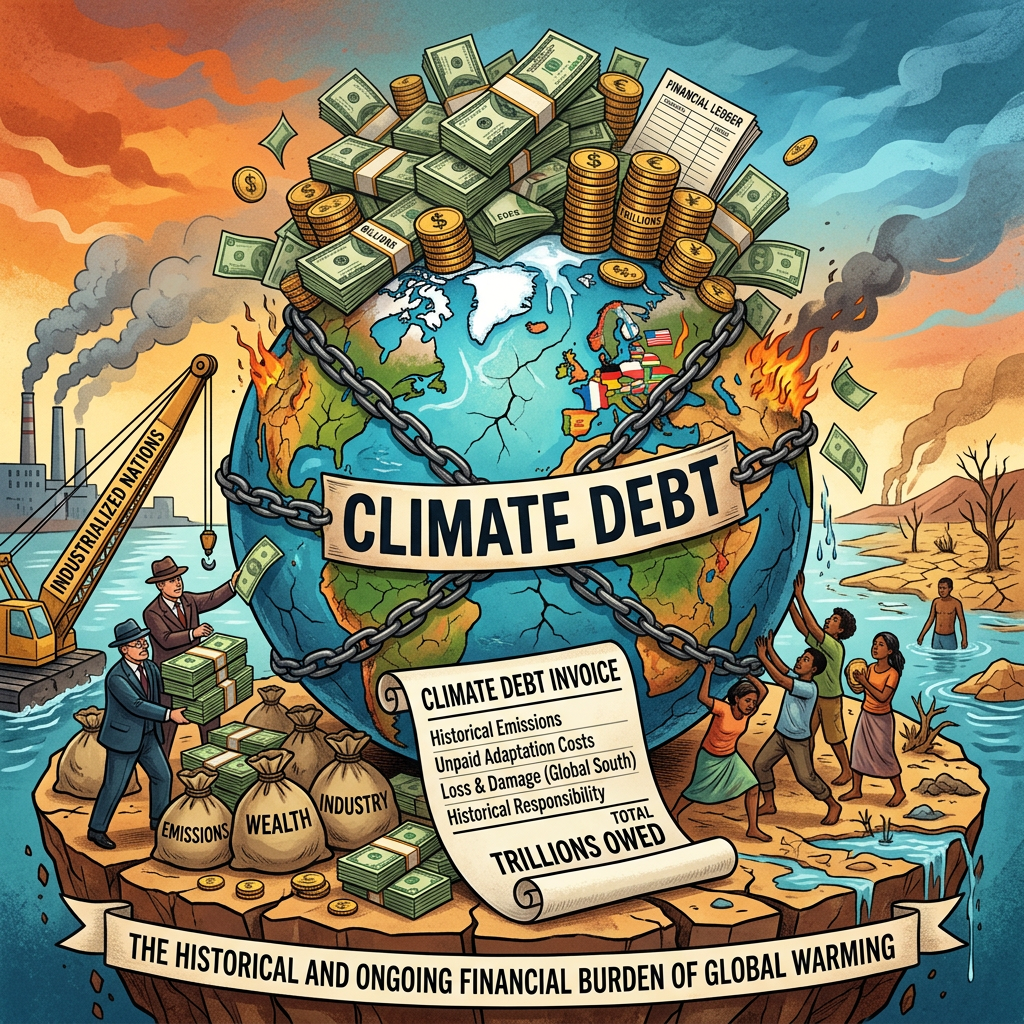
With the climate crisis intensifying, nations across the Global South find themselves on the frontlines of an environmental emergency. While some are marking strides in adaptation, many are hindered by a staggering obstacle: a mountain of sovereign debt. This creates a paralysing paradox—how can these nations be expected to meet the UN’s Sustainable Development Goals, when their fiscal resources are consumed by interest payments?
Enter the new debt-for-climate swap. In its simplest form, the swap is an agreement between a creditor and a debtor nation. The creditor agrees to forgive a portion of foreign debt or provide significant relief; in exchange, the debtor government commits to investing those reclaimed funds into specific environmental projects. These initiatives range from large-scale decarbonisation efforts to the development of climate-resilient infrastructure.
Andrew Karolyi, Dean of the SC Johnson College of Business, is a prominent advocate for these mechanisms. He notes that signatories to the Paris Agreement have a formal commitment to provide financial assistance to developing countries. According to Karolyi, these swaps help fulfill those obligations while offering a layer of accountability:
“Due to the transparency involved in the swap, creditors can be assured that the capital will be used for its intended purpose and not siphoned off for other uses.”
The practical application of this model is best exemplified by the Seychelles. In 2017, the island nation concluded a landmark “debt-for-adaptation” swap. Under a tripartite model, The Nature Conservancy purchased $22 million of the country’s debt. In exchange, the Seychelles pledged to create 13 new marine protected areas. This success has become a blueprint; The Nature Conservancy has since moved to replicate the model in Grenada with a $60 million swap, with plans for further expansion globally.
Ultimately, debt-for-climate swaps represent more than just financial engineering; they are a bridge between fiscal stability and environmental survival. By decoupling the “debt trap” from climate action, these agreements allow developing nations to pivot from crisis management to long-term resilience. While they are not a silver bullet for the trillions needed to fund the global energy transition, the success in the Seychelles proves that with the right level of transparency and international cooperation, debt can be transformed from a burden into a powerful engine for conservation.


Leave a comment