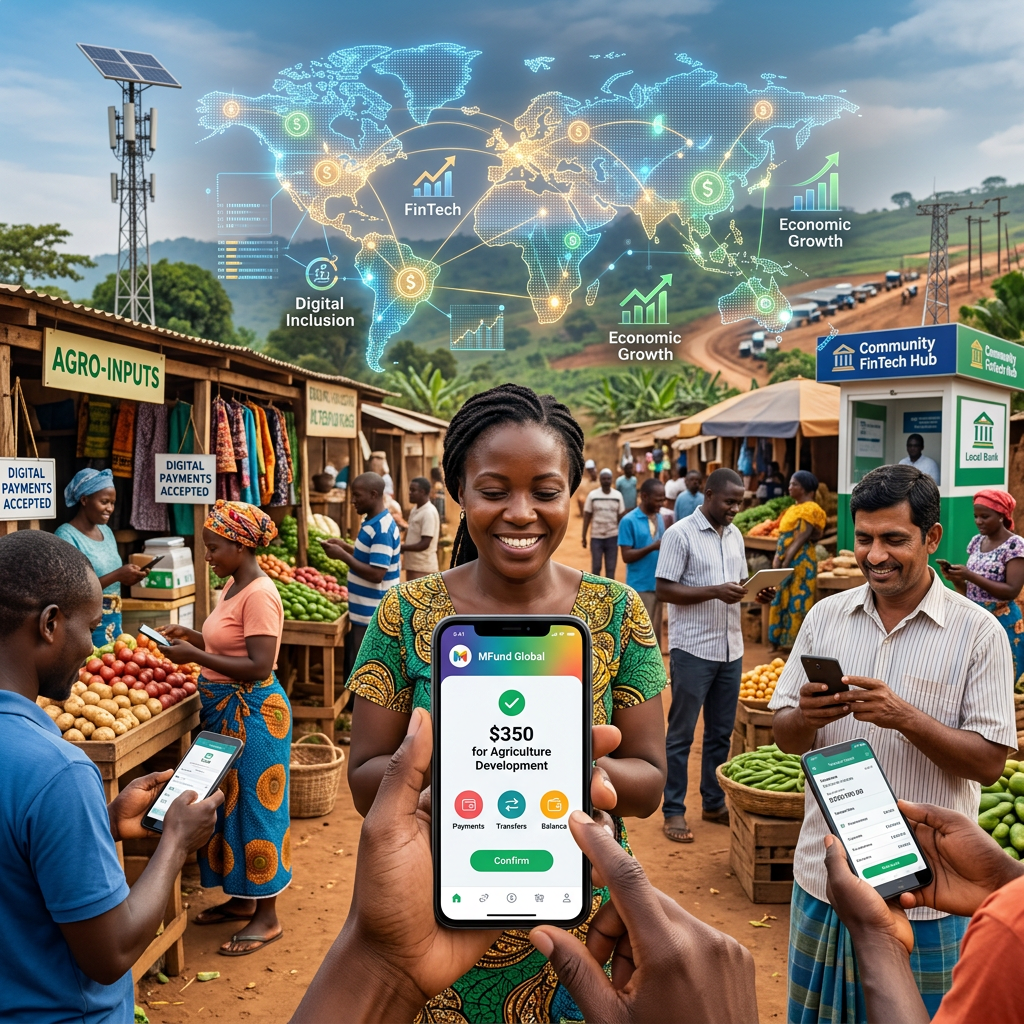
For decades, the World Bank and global economists have recognised a fundamental truth: deeper, more developed financial systems are the backbone of economic growth. Yet, for nearly two-thirds of adults in the developing world, traditional banking remained an inaccessible luxury due to geographic distance, high costs, and a lack of formal identification. Today, a digital revolution is dismantling these barriers, proving that digital financial inclusion (DFI) is not just a technological trend, but a primary engine for achieving the United Nations Sustainable Development Goals (SDGs).
Breaking Barriers through Innovation
Digital finance is redefining the “how” and “where” of money management. By leveraging high mobile phone penetration, technology is maximising economies of scale and lowering transaction costs. This shift is particularly vital for those with low, erratic incomes who require financial products tailored to their specific realities.
The impact is most visible in regions like Sub-Saharan Africa, where over a fifth of the adult population now holds a mobile money account. These platforms have evolved from simple payment tools into sophisticated ecosystems offering digital lending and insurance. A standout example is Pula, a Nairobi-based microinsurance firm. By using satellite data and AI, Pula embeds weather-indexed insurance directly into the price of seeds or fertiliser. When a drought occurs, payouts are made automatically via text, eliminating the need for physical adjusters and providing a safety net for 1.7 million smallholder farmers.
A Catalyst for Global Resilience
The COVID-19 pandemic acted as a “stress test” that highlighted the urgency of digital tools. As the world shuttered, digital finance provided secure, contactless means for governments to distribute emergency liquidity. In Brazil, the digital “Auxílio Emergencial” reached over 68 million participants, while Colombia’s “Ingreso Solidario” used mobile wallets to stabilise millions of families.
- SDG 1 (No Poverty): In Kenya, mobile money alone lifted roughly 2% of the population out of extreme poverty by helping households weather financial shocks.
- SDG 2 (Zero Hunger): In Uganda, mobile money access increased food security for rural households by 45%.
- SDG 3 (Good Health): In Pakistan, mobile-enabled incentives led to a 300% increase in tuberculosis detection, while Tanzania’s Jamii platform reduced insurance administration costs by 95%, making healthcare affordable for just $1 a month.
The Power of Infrastructure: The India Model
Perhaps the most striking success story is India’s Unified Payments Interface (UPI). Built upon “Aadhaar”—the world’s largest biometric ID system—UPI has revolutionised commerce through a low-cost, QR-code-based system. By 2023, UPI was processing 8 billion transactions a month, surpassing the combined digital payment volumes of the US, UK, Germany, and France. This “scan-and-pay” reality has integrated 50 million merchants into the formal economy, proving that digital identity and open-access platforms are the prerequisites for scale.
Navigating the Risks
Despite the optimism, the transition to a digital economy is not without peril. The “digital divide” threatens to leave behind those without internet access, particularly women in remote areas. Furthermore, digital footprints create risks regarding data privacy and predatory lending. To mitigate these, the World Bank and OECD emphasise the need for robust legal frameworks, biometric ID expansion, and comprehensive financial literacy programs.
Digital finance has moved beyond a niche fintech experiment to become a global necessity. By streamlining processes and fostering innovation, it is not only helping the world recover from recent global crises but is also laying the groundwork for a more inclusive and resilient future. As we look toward 2030, the integration of technology and finance remains our best hope for ending extreme poverty and ensuring that no one is left offline or unbanked.


Leave a Reply